AA36201 Gloster Gladiator MK. II, N5641, No. 263 Squadron, Norway, Spring 1940
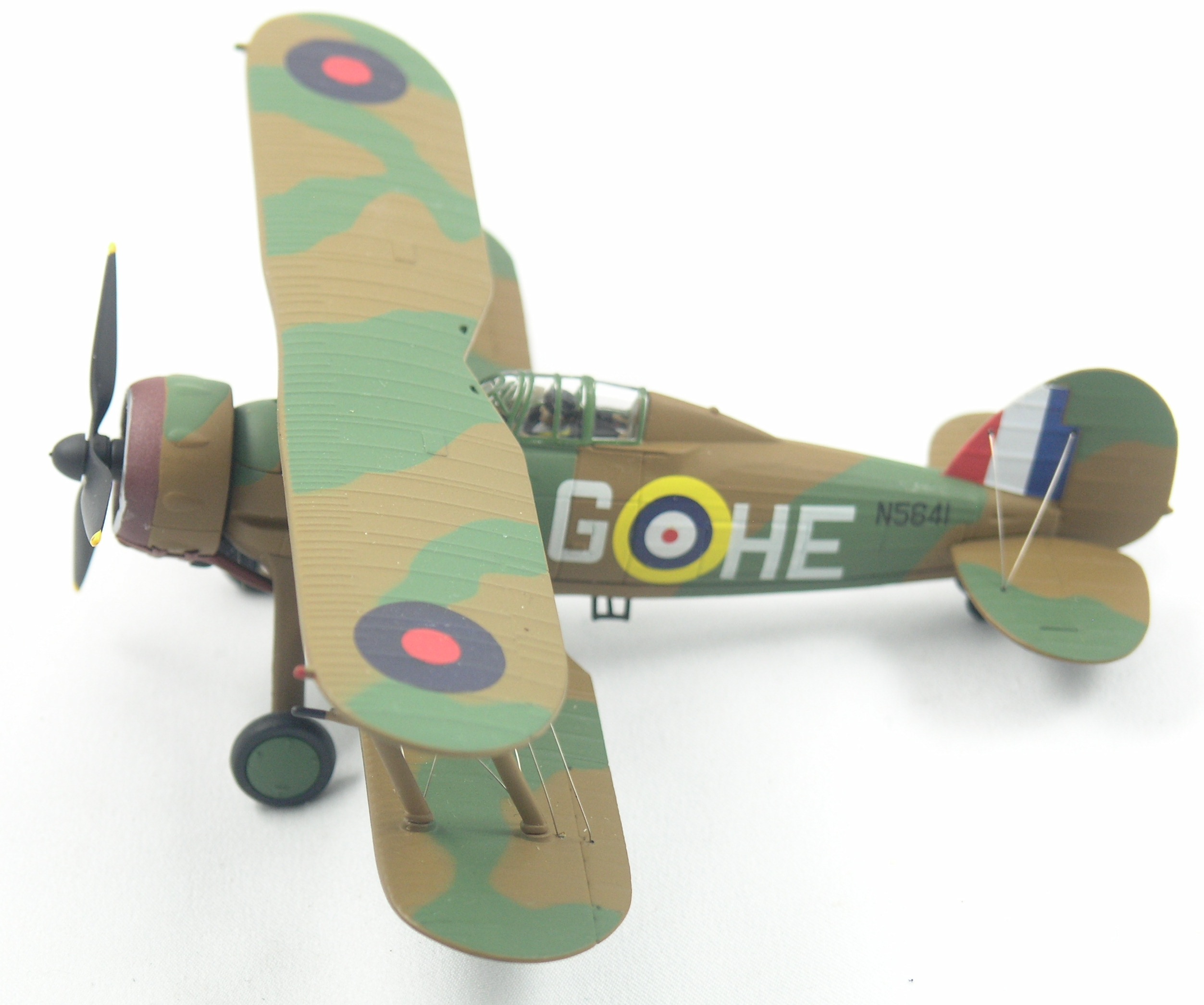

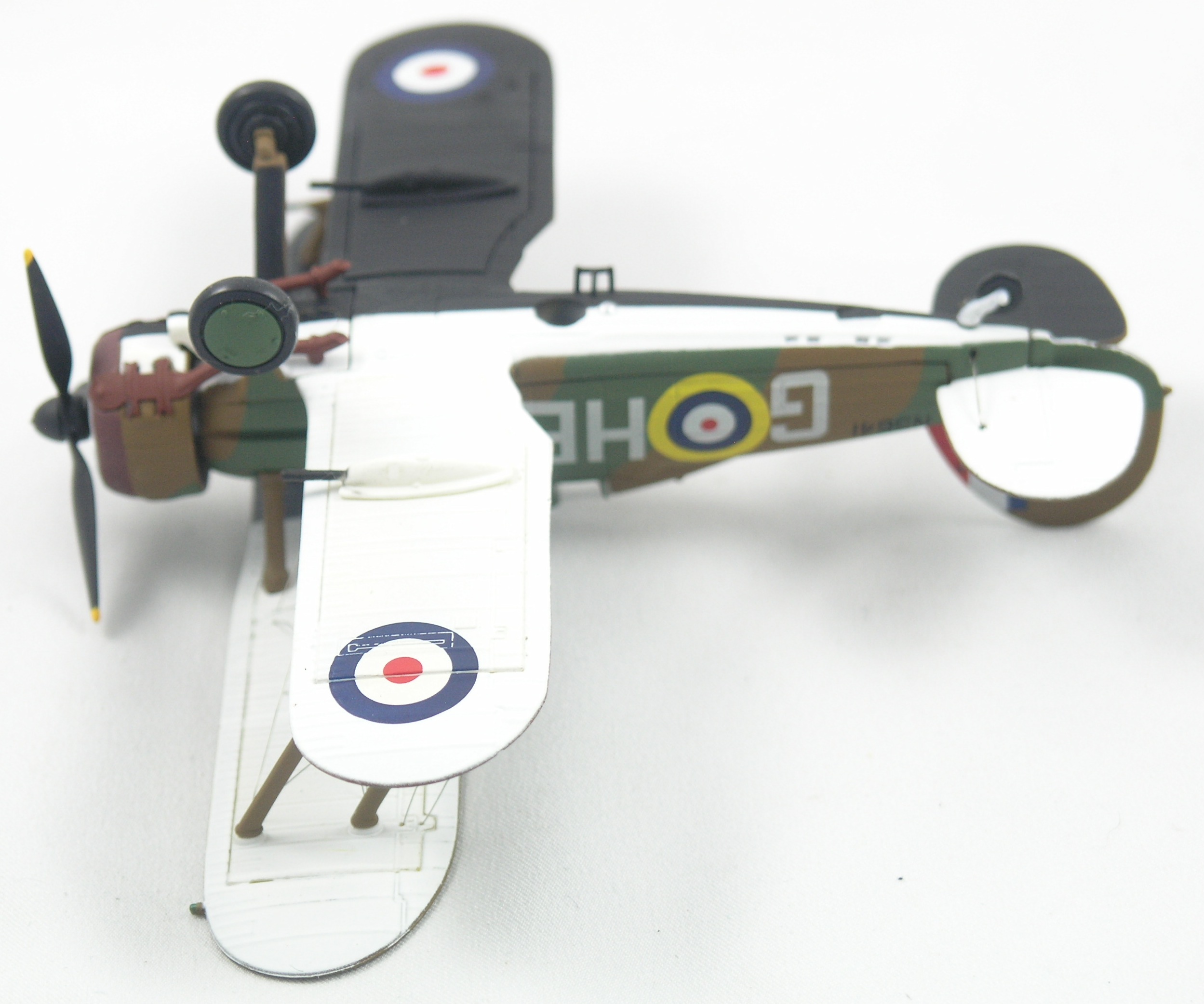
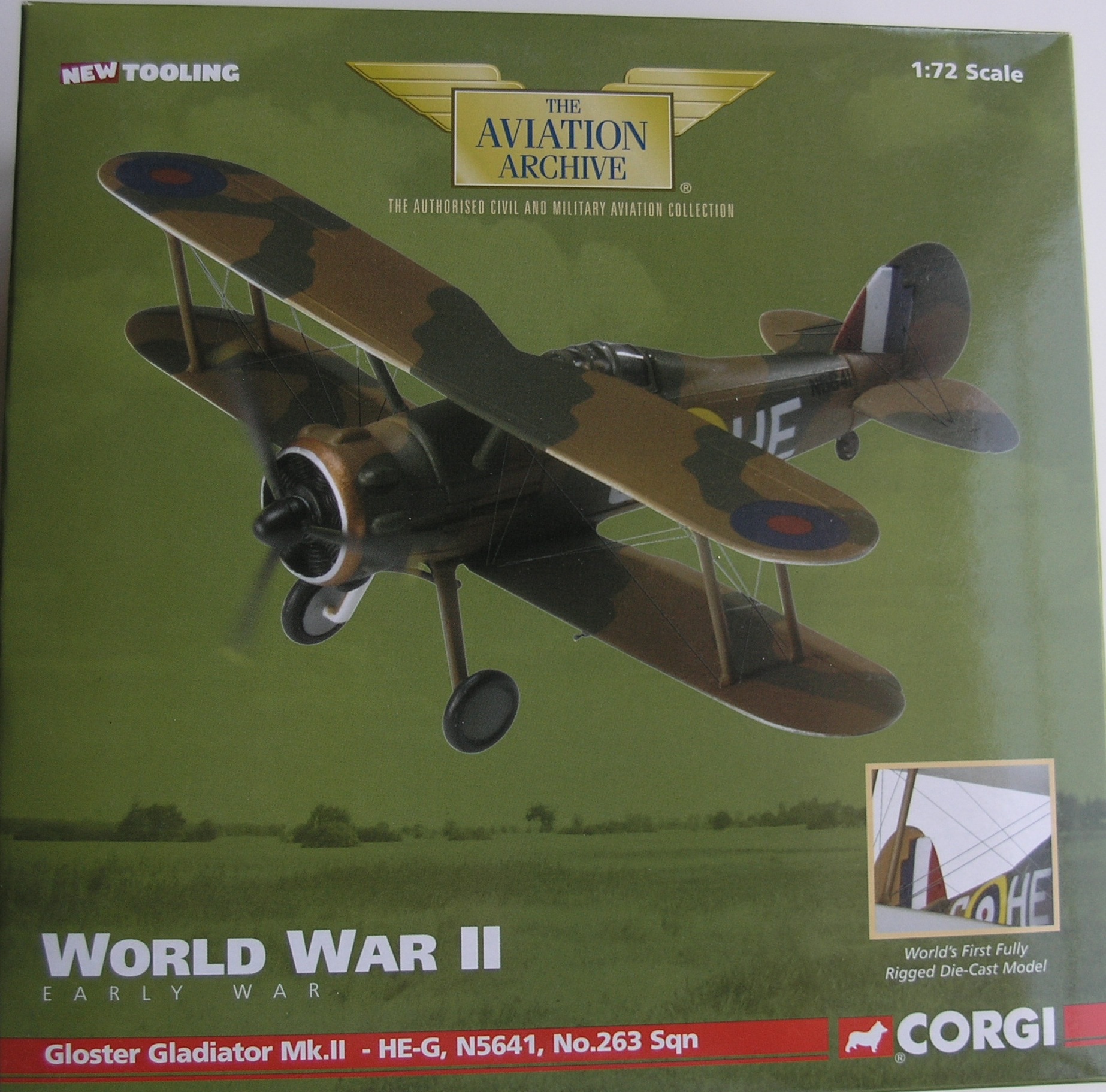
The Gloster Gladiator was the last British biplane fighter, a development of the Gauntlet with an enclosed single seat cockpit, cantilever landing gear and with increased armament, and a 2-blade fixed pitch propeller. First flown in 1935, the Gladiator went into service with the RAF in 1936. The Mark I had a 840 hp Bristol Mercury IX air-cooled engine and the Mark II a Bristol Mercury VIIIA engine. The Sea Gladiator was the variant adopted by the Fleet Air Arm. It was fitted with a deck arrestor, catapult points, and carried a collapsible dinghy. Numbers built totaled a minimum of 756 (480 RAF, 60 RN; 216 exports into 13 countries). Gladiators were also sold to Belgium, Finland, Latvia, Lithuania, Sweden, Norway, China, Ireland, Greece, Portugal, Egypt, Iraq and South Africa. No. 263 Squadron was formed on 27th September 1918, in southern Italy from Nos. 359, 435, 436 and 441 Flights at the former RNAS station at Otranto and its sub-station at Santa Maria de Leura. For the rest of the war, it flew anti-submarine patrols over the Straits of Otranto to prevent U-boats passing into the Mediterranean from the Austro-Hungarian ports on the Adriatic. It was disbanded on 16 May 1919. On 2 October 1939, N0. 263 Squadron reformed at Filton as a fighter squadron. Equipped with Gladiators, it was sent to Norway in April 1940, to give air cover for British and Norwegian forces. Operating from a frozen lake it had all its aircraft rendered unfit for action within three days and returned to the UK to re-equip. In May, the squadron arrived back in Norway, this time further north and flew patrols until the allied forces were withdrawn from Narvik. Its aircraft embarked on the carrier ‘Glorious’, which was sunk en route to the UK by German surface ships.