AA36203B Gloster Sea Gladiator Charity, N5519, Hal Far Fighter Flight, Hal Far, Malta, June 1940

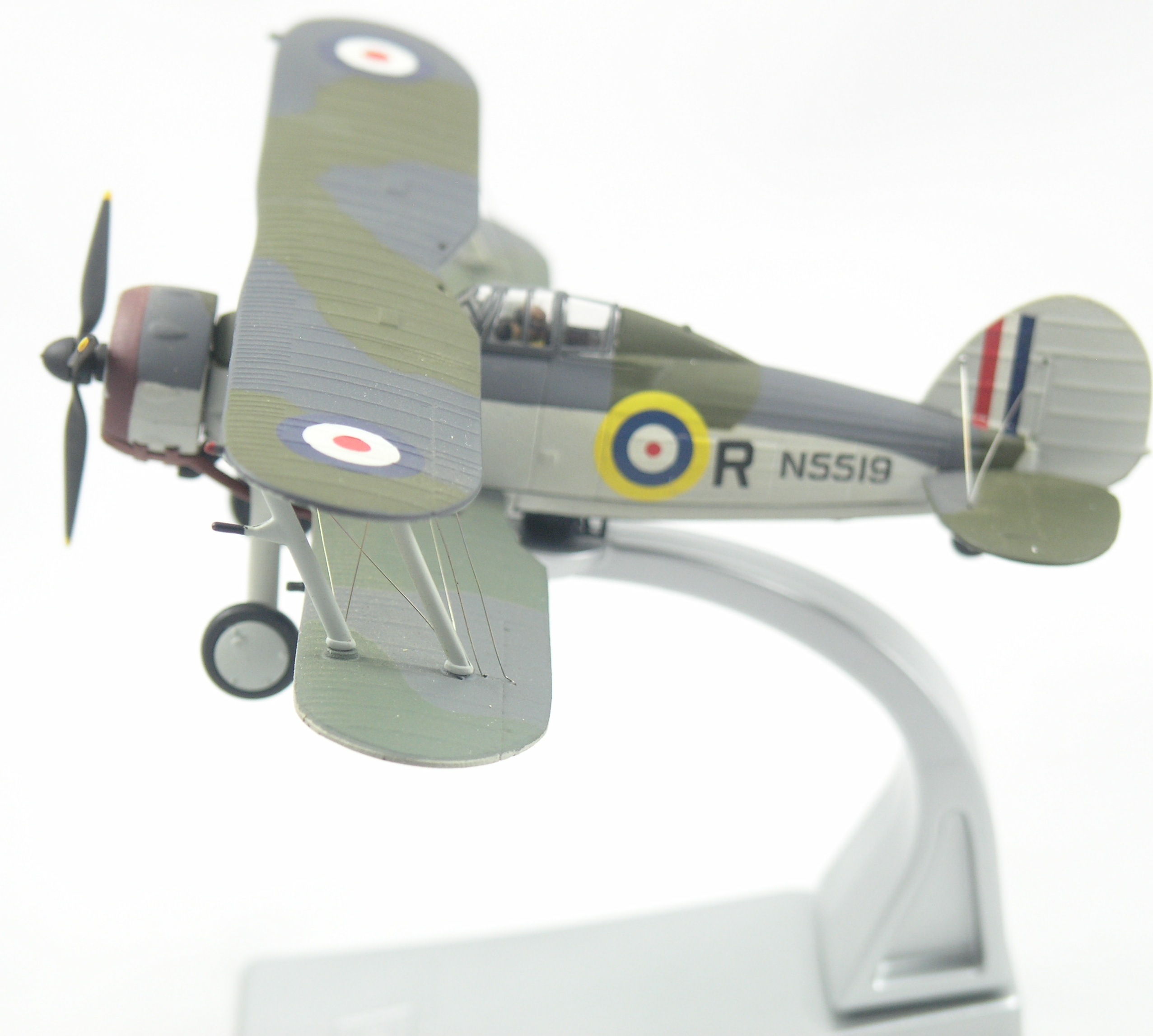


Malta’s air defenses were small at the beginning of WWII. The total air power on Malta consisted of 4 Gloster Gladiator biplanes. These were packed in crates and left at Kalafrana flying boat base by HMS Glorious which left to join the Norwegian campaign. There were enough parts to make up to 8 biplanes, but the Royal Navy wanted four back to join the aircraft carrier HMS Eagle. The remaining 4 were assembled, 3 were to be used on operations with the remaining 1 kept in reserve. After assembling the biplanes the Royal Navy decided on having them back for work in Alexandria, so they were taken apart for re-packing. Following talks between Air Commodore Maynard and the Royal Navy it was decided to leave the biplanes in Malta and they were re-assembled. Their first use in combat came at 0649 on the 11th of June 1940 when 10 Italian Savoia Marchetti 79 bombers bombed Grand Harbour. No aircraft were shot down in this encounter. On the 7th raid of the day the Gladiator’s drew blood by shooting down a Macchi 200 fighter. Although the biplanes were slower than the Italian fighters, they were more maneuverable. Flying Officer John Waters nicknamed the aircraft ‘Faith, Hope and Charity’. Three bladed propellors were fitted in place of he usual two to give the biplanes a faster rate of climb. Other parts were later used from a Swordfish. Superchargers were left on maximum during the climb after take-off (which was against orders) so they could gain height faster. This put extra strain on the engines and 2 of them blew pistons. Maintenance crews converted Blenheim bomber engines to fit the Gladiators. Faith, Hope and Charity fought for 17 days without relief and played a fundamental role in foiling the Italian intelligence into thinking Malta has a substantial fighter defense. ‘Charity’, Sea Gladiator N5519 ‘G6A’ of No. 802 Squadron from June to September 1939, joined the Hal Far Fighter Flight and renamed ‘Charity’ on 19th April 1940. She was involved in defending Malta over the critical 1940 period but was shot down on 29 July 1940 and her pilot F/O PW Hartley was badly burned.